
Circulation Booster Devices & Natural Pain Relief Guides
How Circulation Booster Devices Improve Vascular Health: What Actually Works
How Circulation Booster Devices Improve Vascular Health: What Actually Works
Let’s be completely real for a second: out here on the concrete of New York City, your vascular system takes an absolute beating. Whether you're pounding the pavement all day in Midtown, sitting glued to an office chair for ten hours straight in a Wall Street tower, or dealing with the structural vascular changes that come with Type 2 diabetes, compromised blood flow is a ticking clock.
Poor blood circulation affects over 8 million Americans, and honestly, most people treat the early warning signs like a minor annoyance. You wake up with freezing feet, your fingers go completely numb while you're typing, your ankles swell up like water balloons after a standard shift, or you get that deep, throbbing ache in your calves. You figure you’re just getting older, or maybe the office AC is cranked up too high.
Ignoring these symptoms won't make them go away. It just paves a direct path to chronic venous insufficiency, peripheral artery disease (PAD), or severe diabetic neuropathy.
When people search for how to improve circulation, they get flooded with old-school gimmicks or impractical medical setups. Nobody living a real, fast-paced life has the time to sit anchored to a wall outlet for an hour, hooked up to a heavy, monstrous piece of clinic machinery. The game has completely changed. Modern circulation booster devices have evolved past giant, clunky platforms. The real breakthrough in biohacking and vascular recovery is all about high-performance, wearable pain relief device systems—specifically, advanced 650nm semiconductor cold laser wrist watches equipped with dual nasal probes.
Let's unpack the raw, no-nonsense clinical science of what actually happens inside your arteries, red blood cells, and capillaries when you use these modern wearable lasers, and how you can use them to reclaim your energy, drop your blood pressure, and fix your blood flow from home.
Remember from the other pages or article I wrote that I am not a doctor. I do not want to be associated with a health influencer either, even though this is exactly what I am doing. I only share my experiences in health, from a sufferer's point of view; that's all. It is like a shortcut designed for you, to handle properly, in due time, the same health issues as mine if you have them. There are a lot of misleading influencers who talk nonsense or spread dangerous points of view. I found a balance between classical medicine and new or alternative ones that potentiate one another.
The Wrist and the Nose: The Ultimate Highways to Your Entire Blood Supply
To understand how a compact, wearable watch can optimize blood flow throughout your body without drugs, you have to look at the anatomy of where it sits. Medical engineers didn't pick the wrist and the nasal cavity because they look cool—they chose them because they are the most accessible vascular choke points in the human body
1. The Radial and Ulnar Arteries
Look at your left wrist. Right under the skin lie two large, high-volume blood vessels: the radial and ulnar arteries. This is the main transit route for blood traveling to and from your hand. Because these arteries run so shallowly before diving deeper into the tissue, there is almost zero structural fat or thick muscle blocking them.
When you strap on a semiconductor laser device right over your pulse point, the light doesn't just sit on your skin. It penetrates straight through the vessel walls, irradiating the high-velocity stream of blood passing through. Think of it as a personal filtration and optimization hub: as your heart pumps, your entire blood volume continuously circulates past these laser diodes, getting treated drop by drop.
2. The Nasal Microcapillary Network
Your nasal cavity is one of the most intensely vascularized zones in your entire body. It is packed with a dense, microscopic web of capillaries running right beneath an incredibly thin mucous membrane. Even better? This capillary bed connects directly to your cerebral circulation—the blood vessels feeding your brain.
By utilizing a dual-channel nasal laser probe alongside the wrist watch, you are hitting the circulatory system from two sides. The nasal probe delivers a direct bio-stimulative trigger to the blood heading upstairs, bypassing the blood-brain barrier's physical resistance to systemic drugs, while simultaneously treating local issues like chronic rhinitis and sinus inflammation.
The Raw Science of Photobiomodulation: What the Laser Does to Your Blood
These modern circulation booster devices don't rely on thermal energy. They aren't hot lasers used in surgery to cut tissue. Instead, they utilize Low-Level Laser Therapy (LLLT), or cold laser technology, emitting a highly precise 650nm wavelength of red light.
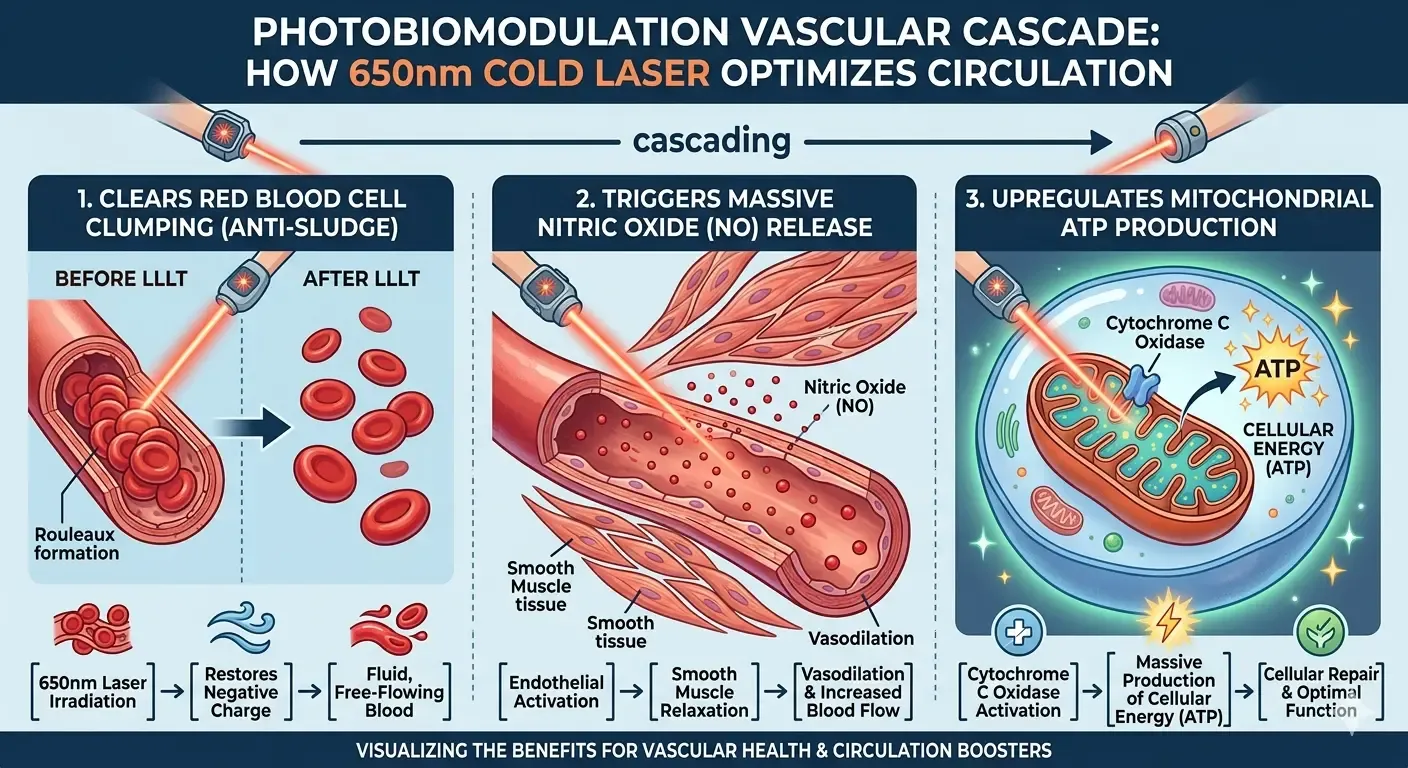
When these laser photons hit your bloodstream, they trigger an immediate cascade of biochemical reactions. This process is called fotobiomodulation, and it addresses the root cause of poor circulation through three distinct mechanisms:
1. Destroying the "Rouleaux Effect" (Thick Blood)
When you are stressed, sedentary, or dealing with high blood sugar and cholesterol, your red blood cells (erythrocytes) lose their natural electrical surface charge. Instead of bouncing off one another, they start sticking together like a stack of dropped coins. In clinical terms, this is called the Rouleaux effect, but you can think of it as "liquid mud" or blood viscosity. This thick, sluggish blood cannot squeeze through the tiny microcapillaries in your toes, fingers, or nerves.
The 650nm laser instantly recharges the outer membrane of your red blood cells, restoring their normal negative electrical charge. Just like two negative magnets, the cells blast apart and repel each other. Your blood transforms from a thick sludge into a free-flowing, high-velocity stream that can easily navigate into the deepest, narrowest tissues in your body, showing you exactly how to improve blood circulation safely and naturally.
2. Flooding the Pipes with Nitric Oxide
The laser light stimulates the endothelial cells lining your blood vessels to release a massive wave of Nitric Oxide (NO). Nitric oxide is the absolute holy grail of cardiovascular health; it is the chemical signal that tells your blood vessels to relax, open up, and widen.
When your arteries dilate via this natural trigger, peripheral resistance drops instantly. Your heart doesn't have to strain or pump like crazy to force blood through a constricted system. This open-highway effect delivers immediate natural pain relief to starving, ischemic nerves and answers the burning question of how to increase blood flow without prescription beta-blockers or heavy stimulants.
3. Boosting Cell Elasticity and Deformability
To deliver oxygen to a dying nerve or a sore muscle, a red blood cell often has to pass through a capillary vessel that is actually narrower than the cell itself. To do this, the cell must be incredibly flexible. LLLT laser therapy dramatically improves the deformability and elasticity of your cell membranes. They can bend, shape-shift, and slide through tight vascular spaces easily, carrying life-saving oxygen where it’s needed most.
The 650nm laser light penetrates right through your skin to hit the absolute power plants of your tired cells. The main target here is a mitochondrial enzyme, and triggering this Cytochrome C Oxidase Activation supercharges the entire electron transport chain. This forces a massive spike in mitochondrial ATP production, giving your cells the exact fuel they need to repair tissue fast, damp down inflammation, and completely kill that heavy-leg feeling after a brutal day on your feet.
The Dual Nasal Target: Snapping Out of Brain Fog and Clearing Sinuses
The inclusion of the dual-line nasal probe is what makes this device an elite ecosystem for at home physical therapy. If you are dealing with chronic allergies, rhinitis, or sinus pressure, your local nasal tissues are locked in a state of permanent, low-grade inflammation. The blood vessels are engorged, fluid accumulates, and you can't breathe through your nose.
Local Inflammation Melt: The cold laser wavelengths directly downregulate pro-inflammatory cytokines in the nasal mucosa. The swelling drops, tissue edema clears out, and your nasal passages open up naturally—without the dangerous rebound congestion caused by over-the-counter nasal sprays.
Brain Fog Eradication: By fluidizing the blood inside the nasal capilary bed, you are directly optimizing the rheology (flow properties) of the blood entering the cerebral cortex. More oxygenated, low-viscosity blood reaching your brain means an instant boost in mental clarity, sharp focus, and a dramatic drop in tension headaches.
Our Top Pick for Portability
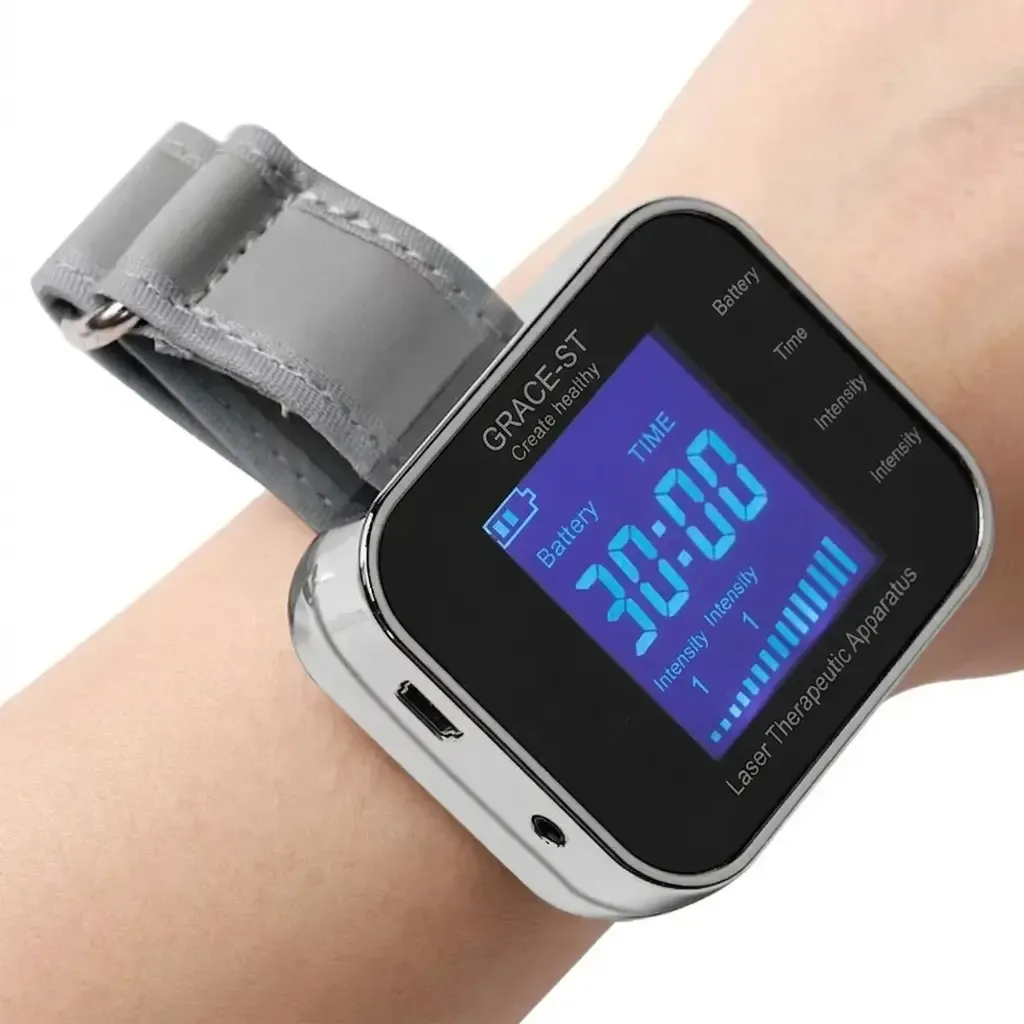
Wrist Light Wave Meter Physical Therapy Equipment
Deepen Your Knowledge: Recommended Reading


Clinical Profiles: Who Needs a Wearable Laser Circulation Booster?
This isn't a generic massager or a luxury spa item; it's a targeted, clinical-grade tool designed for people staring down serious vascular degradation.
The Hypertension Battle: If you are constantly checking your monitor and seeing your blood pressure numbers creep up, your arteries are stiff and locked up. The continuous release of nitric oxide from daily laser sessions stretches and conditions the arterial walls, systematically driving your baseline numbers down into a safer zone.
The Diabetic Neuropathy Shield: High blood sugar acts like sandpaper inside your microcapillaries, shredding the tiny vessels that feed your peripheral nerves. Once those vessels die, your nerves starve, resulting in burning pain and numbness. Wrist and nasal lasers keep the blood liquid-smooth, keeping those vital microcapillaries open to prevent nerve death and diabetic foot ulcers.
The High-Cholesterol / Viscous Blood Profile: If your blood panel shows high triglycerides or elevated LDL, your blood is physically thicker. This device acts as a natural, non-chemical fluidizer, reducing systemic blood viscosity and lowering the risk of plaque accumulation along your arterial walls.
The Daily Survival Blueprint: How to Use Your Device for Maximum ROI
Vascular tissue didn't break down overnight, and it won't rebuild itself with lazy, occasional use. To get genuine clinical results, you need a disciplined, structured protocol. Treat this like an unyielding part of your health stack.
Step-by-Step Routine:
Hydrate First (The Golden Rule): Before you even turn the watch on, drink one full glass of warm water. Because the laser actively breaks up red blood cell clumping and alters blood viscosity, your body needs adequate water volume to flush out metabolic waste and keep the fluid dynamics optimal.
Lock Down the Pulse Point: Strap the watch onto your left wrist. Ensure the laser array on the back of the casing is sitting snugly over your radial artery (the thumb side of your wrist where you take your pulse). Tighten the strap so it doesn't shift, ensuring all the light energy transfers directly into the bloodstream instead of leaking out.
Deploy the Nasal Probe: Plug the auxiliary nasal line into the watch. Pop the clean silicone tips onto the dual diodes and insert them gently into your nostrils.
The Schedule:
Phase 1 (Weeks 1-2): Run one 20-minute session per day at medium intensity, preferably in the morning to wake up your circulatory system and clear out overnight stiffness.
Phase 2 (Weeks 3+): Move to a twice-a-day schedule. Run a 30-minute session in the morning for mental clarity and a 30-minute session in the evening (at least an hour before bed) to undo the physical damage of sitting or standing all day.
Best for Multi-Function & Nasal Therapy
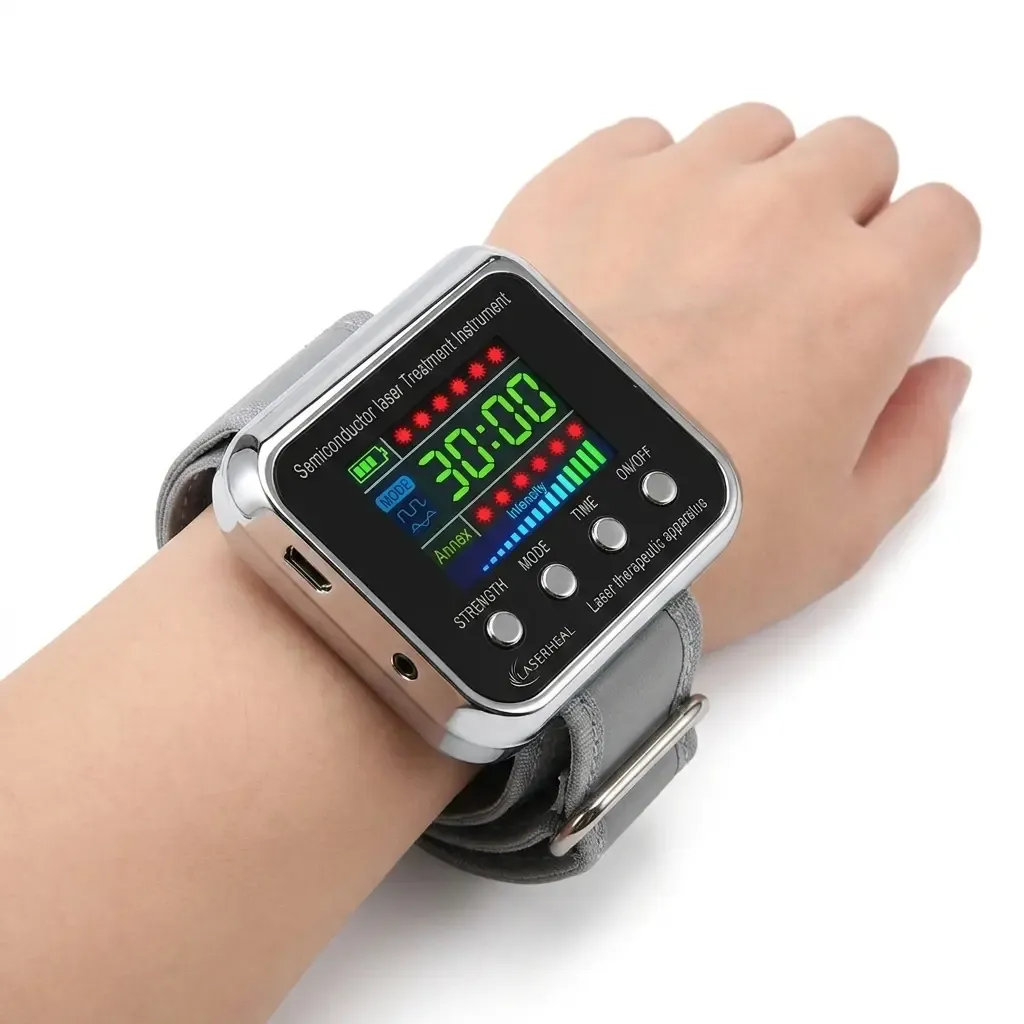
Semiconductor Nano Wavemeter Wrist Laser Instrument
The No-Nonsense Financial Reality: Portable Prevention vs. Medical Bankruptcy
Let’s talk numbers, straight up. The healthcare system in America is a multi-billion dollar meat-grinder designed to bill you endlessly once you are broken, rather than keeping you healthy. Letting your vascular health collapse is one of the most expensive financial mistakes a person can make.
Take a look at the actual out-of-pocket costs of letting vascular neglect catch up to you:
Diabetic Foot Ulcer Clinical Debridement & Treatment: Easily runs between $15,000 and $25,000 per episode, involving endless hospital visits, specialized wound dressings, and hyperbaric chamber bills.
An Emergency Room Visit for a Sudden Hypertensive Crisis: Will blast your insurance deductible for over $5,000 for just a few hours of basic observation, blood work, and an IV drip.
Monthly Vascular & Blood Pressure Medications: Can effortlessly set you back $100 to $300 a month for life—money completely thrown down the drain just to manage symptoms without ever fixing the root structural issues.
When you look at the cold, hard math, a premium, wearable wrist laser circulation booster device isn't a luxury expense—it's a massive financial shield. It represents a microscopic fraction of what you would pay for a single specialized clinical intervention. Investing in your vascular health today keeps your hard-earned cash where it belongs: in your bank account. More importantly, it keeps you fully independent, walking, and moving on your own two feet.
Take Absolute Command of Your Independence Today
Your blood vessels don't fail overnight. They degrade slowly, inch by inch, while you ignore the freezing hands, the creeping numbness, the foggy head, and the heavy legs. Waiting until the damage is so severe that you need aggressive surgery or handfuls of prescription pills is a losing game.
Advanced, wearable semiconductor wrist lasers give you a safe, non-invasive, and scientifically proven way to fight back right from your desk, your couch, or your daily commute. By actively purifying your blood, slamming the brakes on cellular clumping, and forcing your arteries to dilate, you give your body the exact tools it needs to reverse tissue starvation and eliminate pain.
The choice is yours: you can sit back and watch your mobility fade, or you can take proactive, aggressive control of your health. Explore our engineered line of Class II wearable laser circulation devices, lock in your daily protocol, and feel the undeniable power of a fully oxygenated, free-flowing, high-energy body. Your long-term independence depends entirely on the choices you make today.
Ready to restore healthy circulation? Explore clinically-tested devices designed for your specific condition. Your mobility—and independence—depend on the choices you make today.
If you want the full picture on how all these tools work together for better circulation, check out my complete guide on natural ways to improve vascular health at home. It goes much deeper into the science and daily routines that actually make a difference.
Recommended Devices in Our Categories





Contact: info@restoremobility.org
I am not a doctor or licensed medical professional. The information and experiences shared on this website are for educational and informational purposes only. Nothing on RestoreMobility.org is intended to diagnose, treat, cure, or prevent any disease or medical condition.
All devices (red light therapy, TENS/EMS units, wrist laser devices, circulation massagers, etc.) and suggestions are based on my personal experience and general research. Results vary from person to person. Always consult with a qualified healthcare provider before using any wellness device or starting a new health routine — especially if you have high blood pressure, diabetes, heart conditions, pacemakers, implants, are pregnant, or have had recent surgery.
© Created by Restore Mobility