Circulation Booster Devices & Natural Pain Relief Guides
The Astoria Blueprint: How an Electric Muscle Stimulator Rebuilt My Body Between Coffee Runs and the 7 Train
The NYC Limp and the Death of the Clinic Dream
Let's be honest. If you're reading this, there's a decent chance you've got a knee that clicks like a broken subway turnstile, or a lower back that feels cursed after helping a buddy move into a fourth-floor walk-up in Bushwick. I know that specific "NYC limp" well. Months ago, I took a bad spill on a patch of black ice near the 7 train in Astoria, and my leg went from working fine to feeling like dead weight almost overnight.
The standard advice is to go to a clinic. But in this city, traditional rehab is its own logistical fight — a six-week waiting list, a real co-pay every visit, and losing hours of your day to traffic or delayed trains just to have someone half-watch you do leg lifts for forty minutes. I didn't have that kind of time, and I didn't want to be another number in a crowded office.
I needed a way to bring real physical therapy at home into a 400-square-foot apartment, without losing quality in the process. What follows is a deep dive into how an EMS muscle stimulator actually works, and what building a home recovery routine around it looked like for me.
Quick disclaimer: everything here comes from what I tested myself. I'm not a doctor or licensed PT. If you have sharp pain, numbness, a recent surgery, a pacemaker, implants, or you're pregnant, talk to your physician before starting anything below. This is what worked for my own recovery, not a treatment protocol for you to follow blind.
Why Home Recovery Beats Waiting Around for an Appointment
New York doesn't slow down just because your body needs it to. The real advantage of physical therapy at home isn't some fancy office — it's frequency. In a clinic, you might get in twice a week if you're lucky. At home, you can work on recovery every single day.
Consistency is what actually moves the needle here — using an electric muscle stimulator for fifteen minutes daily, rather than one intense session a week, gave me steadier, more noticeable progress in how my knee moved and felt. Your body adapts faster to a stimulus it experiences regularly, in the same space you already spend most of your time in — which is exactly why the EMS machine became one of the more useful things in my apartment, not just another gadget in a drawer.
Most people who buy one of these end up shoving it in a closet within a month, usually right around when the pain is still there, just quieter. Consistency, not intensity, is what actually separates people who see results from people who don't.
Decoding the Gear: EMS vs. TENS
When I first started looking into home recovery gear, I assumed a TENS EMS machine was just a fancy buzzer. I was wrong, and understanding the difference matters:
TENS (Transcutaneous Electrical Nerve Stimulation): This is for right now. It sends pulses that crowd out pain signals before they reach your brain — useful for getting through the day comfortably, but it doesn't build anything on its own.
EMS (Electrical Muscle Stimulation): This is for later. An EMS muscle stimulator talks directly to your muscle fibers, forcing a deep, involuntary contraction similar to what happens during a heavy lift.
For anyone with a desk job, an electric muscle stimulator is genuinely useful — during a long call, it can keep your quads or glutes active instead of going dormant from hours of sitting. Using a muscle stimulator machine isn't cutting corners. It's just working with your biology instead of ignoring it.
Deepen Your Knowledge: Recommended Reading


The Foundation: At-Home Exercises, NYC Edition
You don't need a gym — just a cheap mat and about fifteen minutes. These are the moves that took me from limping around Astoria to running for the N train again, done with the EMS muscle stimulator active on the target muscle.
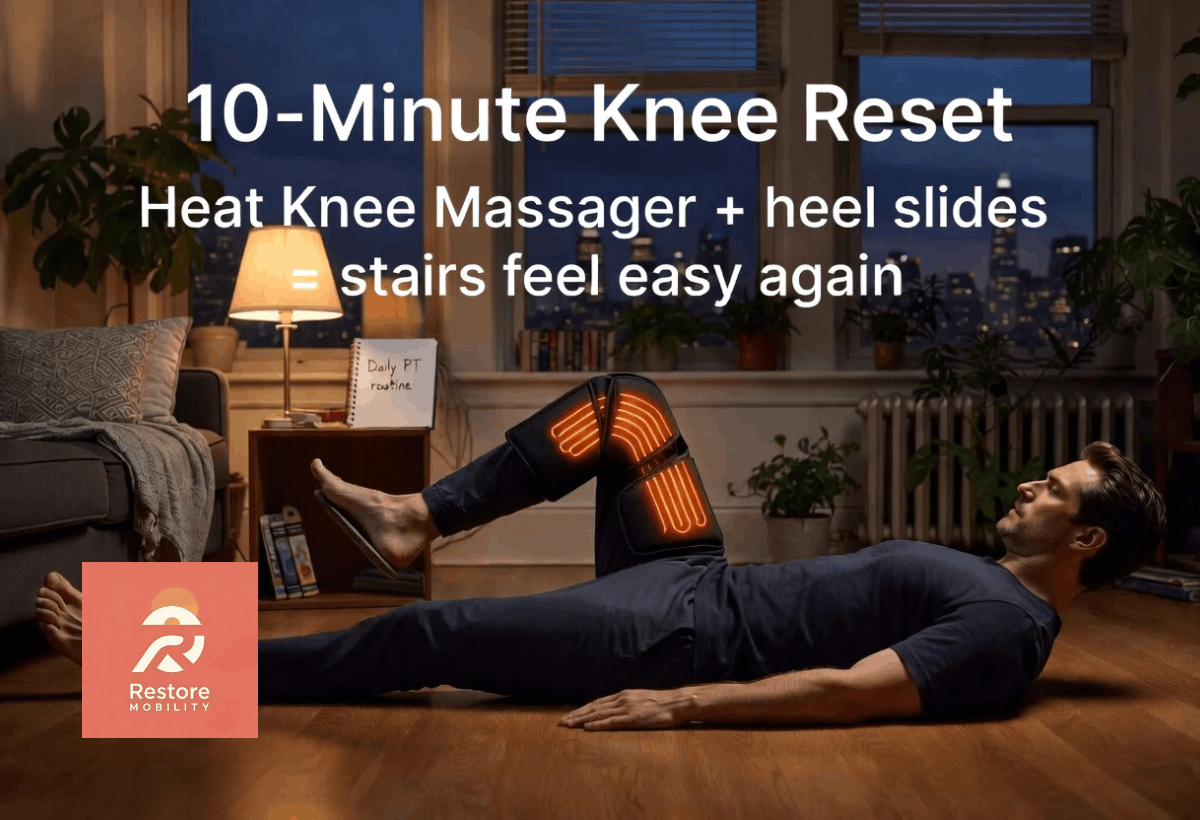
Heel slides: Lie on your back, loop a towel around one foot, and slide your heel toward your glutes as far as comfortable. Running a muscle stimulator machine on your quads during this teaches the muscle to contract and release through the correct range. This took my knee from a stiff 90-degree bend to a full 135 degrees over a few weeks.
Prone extensions for the lower back: Living here means a lot of hunching — grocery bags up four flights, hours over a laptop. Lie face down and lift your arms and legs slightly. Placing electric muscle stimulator pads on the muscles running along your spine reinforces exactly what's under strain from carrying the city around all day.
Wall-supported external rotation: Stand sideways to a wall, elbow at 90 degrees, and press the back of your hand into it. This fixed a chronic shoulder pinch I'd had for years from carrying a messenger bag.
Seated marches: Sit on the edge of a couch and lift your knees high, alternating sides. Useful for keeping the hip flexors from locking up after a long train ride.
Stacking the Routine: My Actual Weekly Schedule
Exercises are the blueprint, but the device does a lot of the daily work. Here's roughly what my week looks like:
Weekdays:
7:30 AM: EMS muscle stimulator on, five minutes of cat-cow stretches while it primes the muscle.
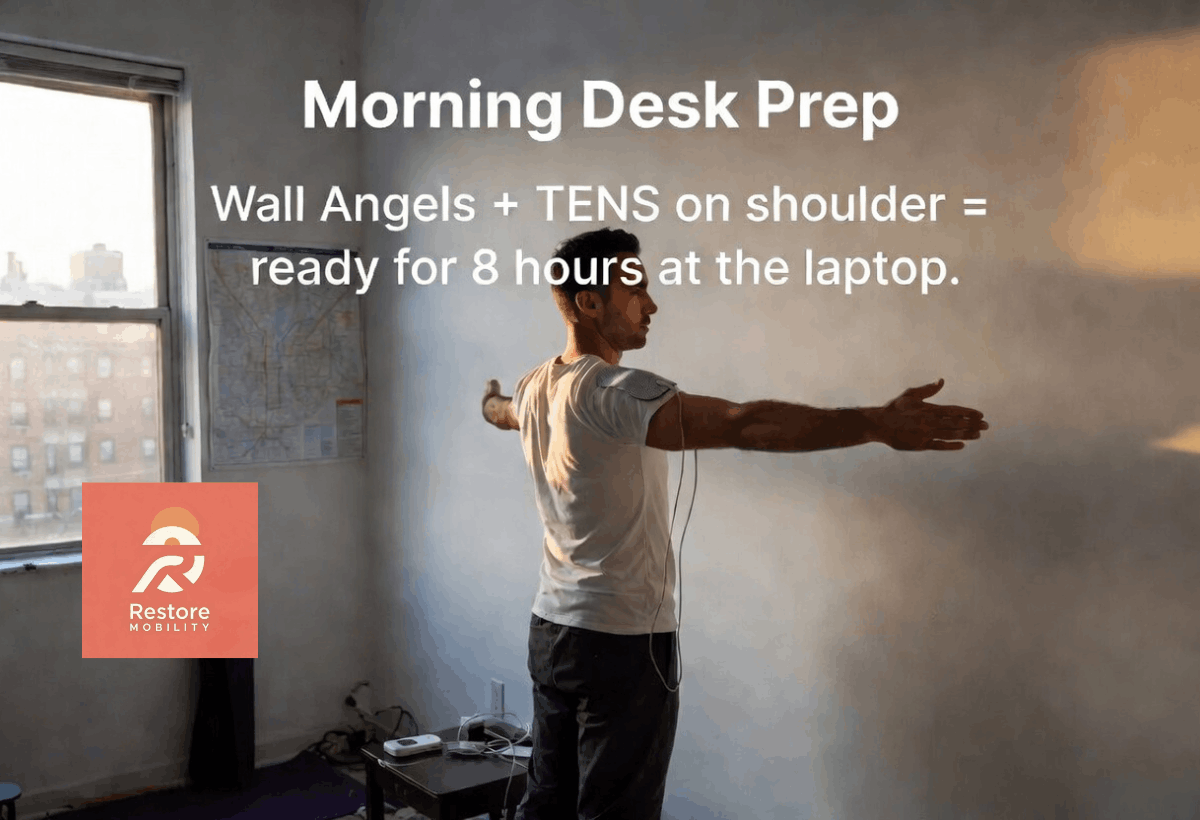
12:30 PM: Two minutes of wall angels at my desk. Nobody's ever noticed or cared.
8:30 PM: The main session — electric muscle stimulator running through a TENS EMS machine cycle to settle the day's aches, plus a few sets of bridges.
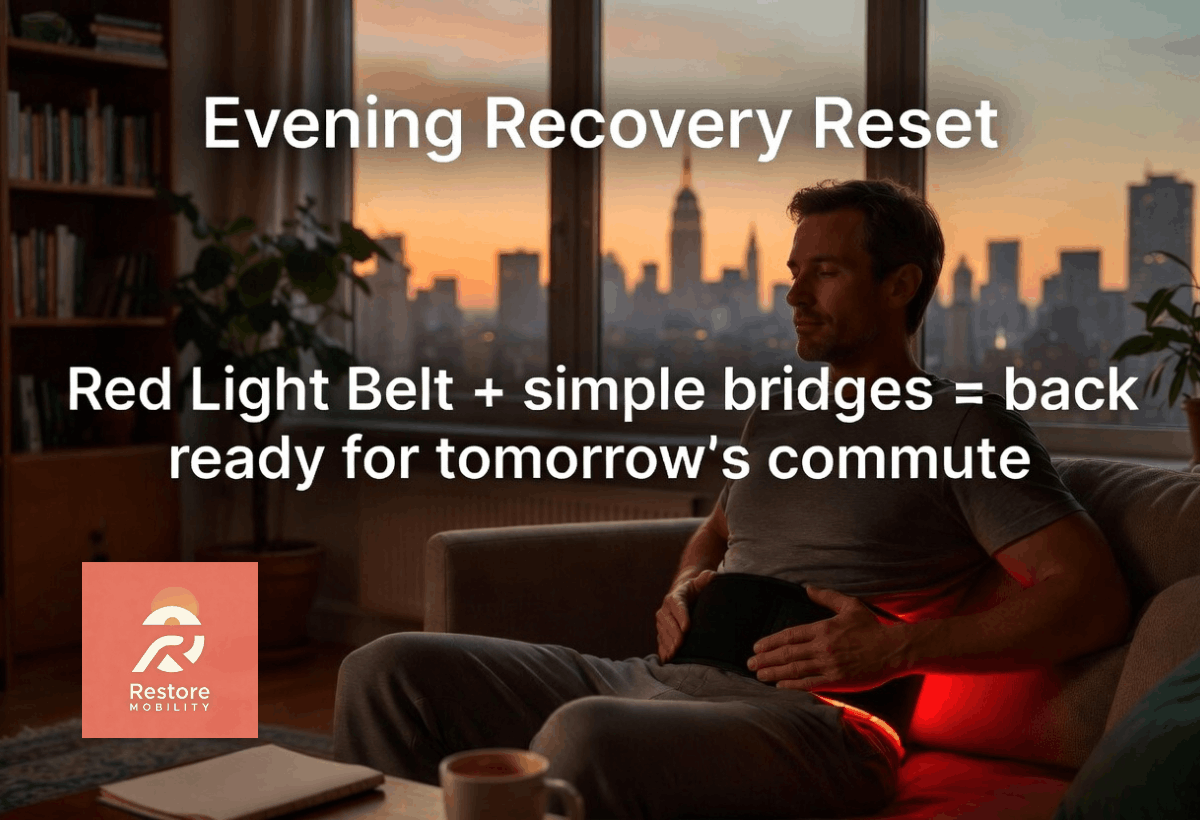
10:00 PM: Red light therapy and a heat massager while winding down.
Weekends: A longer walk, followed by a full session combining the traction belt with deeper EMS muscle stimulator work on the major muscle groups.
Why Electrical Stimulation Actually Works
The common assumption is that home recovery is mostly about stretching. It's really about circulation and recruitment. Tendons and ligaments have a comparatively poor blood supply, which is part of why they heal slowly. Using an electric muscle stimulator pushes blood into areas that don't normally get much — the rhythmic contractions act as a kind of secondary pump for circulation. Pairing that with heat creates conditions that genuinely support recovery, rather than just numbing discomfort temporarily.
This isn't some fringe idea, either — NASA has documented using electrical muscle stimulation to help keep astronauts' muscles from wasting away in zero gravity. If it holds up there, it's a reasonable tool for a knee recovering from a bad fall in Astoria.
Engineer's Verdict
Think of TENS and EMS as two different tools for two different jobs, not competing options. TENS is your short-term signal jammer — good for getting through a rough day, but it doesn't build tissue.
EMS is your long-term muscle recruitment tool — it needs daily, moderate use to actually change strength and mobility over weeks, not a single intense session. A muscle stimulator machine that only offers one mode is doing half the job most people actually need.
Common Mistakes to Avoid
I tried to push my muscle stimulator machine to max intensity on day three because I assumed more was better. I ended up with a strain that set me back a week. A few things worth knowing:
Skipping the warm-up. Light movement before cranking up your EMS muscle stimulator matters more than it seems like it would.
Ignoring rest. Real recovery happens while you're asleep, not just during the session itself — I had to actually prioritize winding down at night for the home recovery routine to show results.
Going too intense, too soon. If an electric muscle stimulator feels like it's pulling the muscle instead of contracting it, turn the intensity down. You're aiming for a firm, tolerable contraction, not a fight.
What Actually Changed For Me
My own knee flexion went from roughly 95 degrees to 135 degrees over a few months. I'm back to running for the train without that sharp catch in the joint I used to deal with constantly. That's the only result I can speak to firsthand — everyone's timeline and starting point will look different, which is exactly why I'd rather undersell this than promise something specific for you.
Frequently Asked Questions
Is an EMS muscle stimulator safe for daily use?
Generally yes, when you follow the intensity guidelines for your specific device and avoid placing pads over the heart or directly on the neck.
Can I use a TENS EMS machine for both pain and strength?
Yes — TENS mode to take the edge off pain before a routine, EMS mode to build strength during or after.
How long until I notice a difference?
Most people report feeling less stiff within the first week or two. Real structural strength changes from an electric muscle stimulator tend to show up closer to the four-to-six-week mark, consistent with how muscle adaptation generally works.
Take Your Body Back
You don't need a fancy trainer or a Midtown clinic membership. You need a mat, a realistic routine, and a solid EMS muscle stimulator doing part of the heavy lifting alongside you.
The city isn't going to slow down and wait for you to feel better. Start small, stay consistent, and I'll see you on the platform.
Recommended Devices in Our Categories


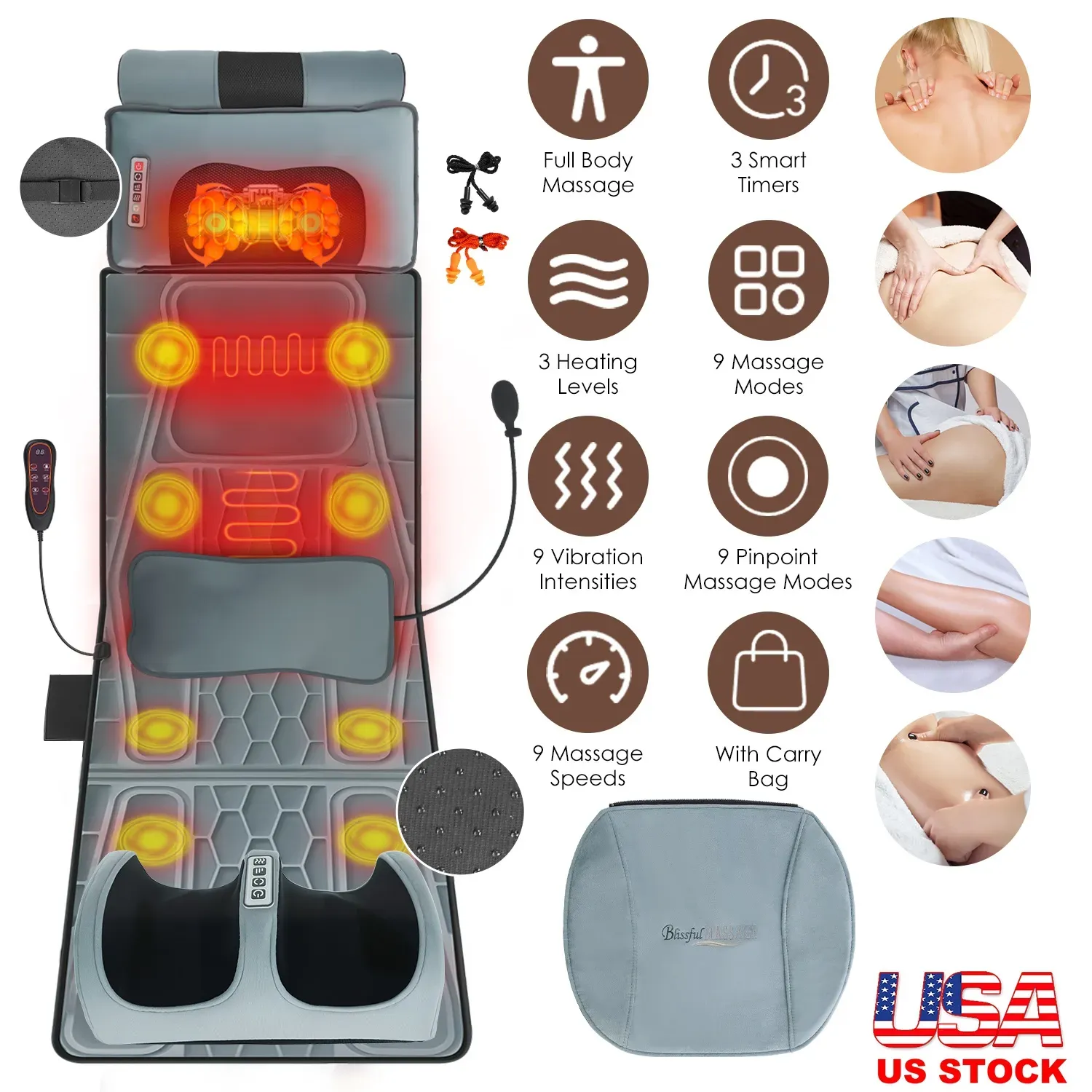
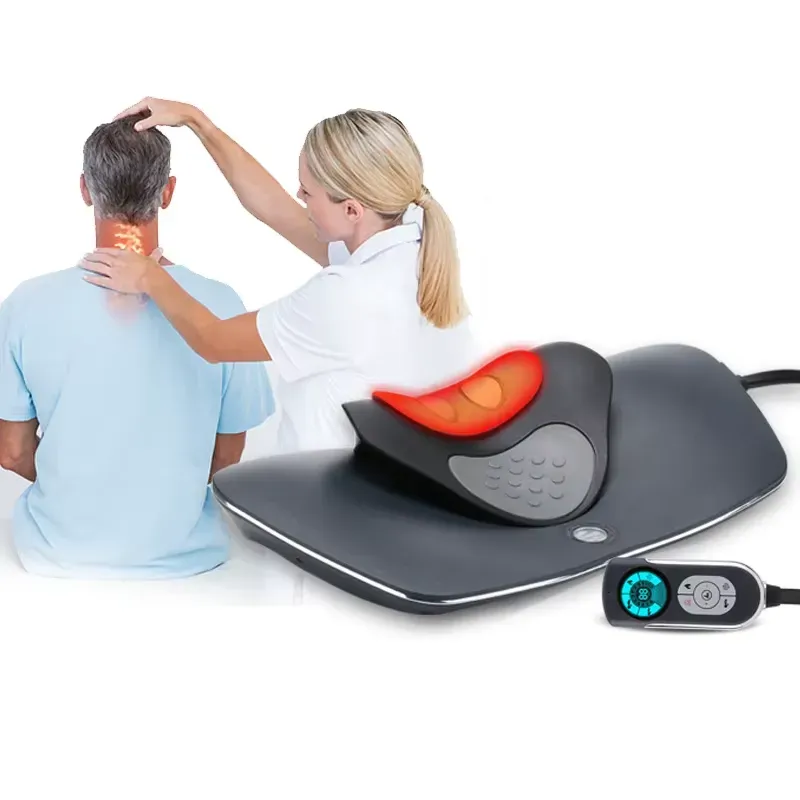
The At Home Physical Therapy Knowledge Hub: Explore All Guides
Category: At Home Physical Therapy



Contact: info@restoremobility.org
I am not a doctor or licensed medical professional. The information and experiences shared on this website are for educational and informational purposes only. Nothing on RestoreMobility.org is intended to diagnose, treat, cure, or prevent any disease or medical condition.
All devices (red light therapy, TENS/EMS units, wrist laser devices, circulation massagers, etc.) and suggestions are based on my personal experience and general research. Results vary from person to person. Always consult with a qualified healthcare provider before using any wellness device or starting a new health routine — especially if you have high blood pressure, diabetes, heart conditions, pacemakers, implants, are pregnant, or have had recent surgery.
© Created by Restore Mobility