Circulation Booster Devices & Natural Pain Relief Guides
Meet Alex, Your Health and Wellness Advisor for the Desk-Bound Body
Ten years ago, I would've laughed if you told me I'd end up writing about circulation, posture, and recovery gear for a living. I'm an engineer by training — mechanical engineering on one side, international economics on the other — and for most of my adult life, "wellness" was something other people did. I sat. I worked. I commuted.
That was the job.
Then my body sent the bill.
It started small — the kind of stuff you brush off. Stiff neck by 3 PM. A dull ache in my lower back that never fully went away. Then it got weirder: my legs felt heavy by the end of the day, like I'd been standing for hours when I'd barely moved. Some afternoons I'd get this foggy, half-panicked feeling around 4 PM that had nothing to do with my inbox. I went to a few different specialists. Each one looked at their one piece of the puzzle — the neurologist checked my nerves, the cardiologist checked my heart, a physical therapist checked my posture — and nobody connected the dots.
Eventually I connected them myself, because that's what engineers do. We look at a system, not just a symptom.
How an Engineer Became a Health and Wellness Advisor

What I found — through a lot of trial and error, some genuinely bad gear, and a stubborn refusal to just "live with it" — is that most of what I was feeling traced back to one thing: hours of static sitting quietly compressing the nerves and blood vessels that are supposed to keep oxygen and circulation moving through your legs, spine, and neck.
Not five separate problems. One mechanical bottleneck showing up in five different places.
That reframing changed everything for me. Once I stopped treating my neck, my legs, and my energy crashes as unrelated issues, I could actually calibrate a routine around the real cause — better circulation, better posture load, better recovery habits between the hours I'm stuck at a screen.
I should say clearly: I'm not a doctor, and nothing here is medical advice. I'm an urban athlete, a longtime martial arts practitioner, and — for what it's worth — I also hold a therapist diploma, which shaped how seriously I take the mind-body side of this, not just the mechanical side. What I bring to this site is direct experience and an engineer's habit of testing things properly before I trust them.
Why I Call Myself a Wellness Advisor, Not a Clinic

RestoreMobility isn't a medical practice, and I'm careful never to present it as one.
Think of me as a health and wellness advisor who happens to have an engineering brain and a background that spans corporate deskwork, martial arts, and a fair amount of reading into the older traditions — Qi, breath, the idea that body and mind aren't really separate systems.
I don't lead with that stuff, but it's part of how I think about recovery, and it shows up naturally in how I write.
Recovery Tech Meets Healthy Habits
My approach blends professional recovery tech — the kind of circulation devices, red light tools, and posture aids I test myself — with the healthier daily habits that actually make that tech worth using. One without the other doesn't do much. A recovery device won't fix a lifestyle that never lets your body reset, and a great morning routine won't undo eight hours of dead-still sitting on its own.
Where Mind-Body Wellness Fits In
The mechanical side is only half the picture. The other half is mind-body wellness — breath work, the martial arts discipline I still practice, the older idea that circulation, tension, and mental clutter are all connected.
I don't push this on anyone who just wants a product review. But if you dig into the site, you'll see it woven through, because it's genuinely part of how I approach health and wellness, not decoration.
What I Actually Do Here
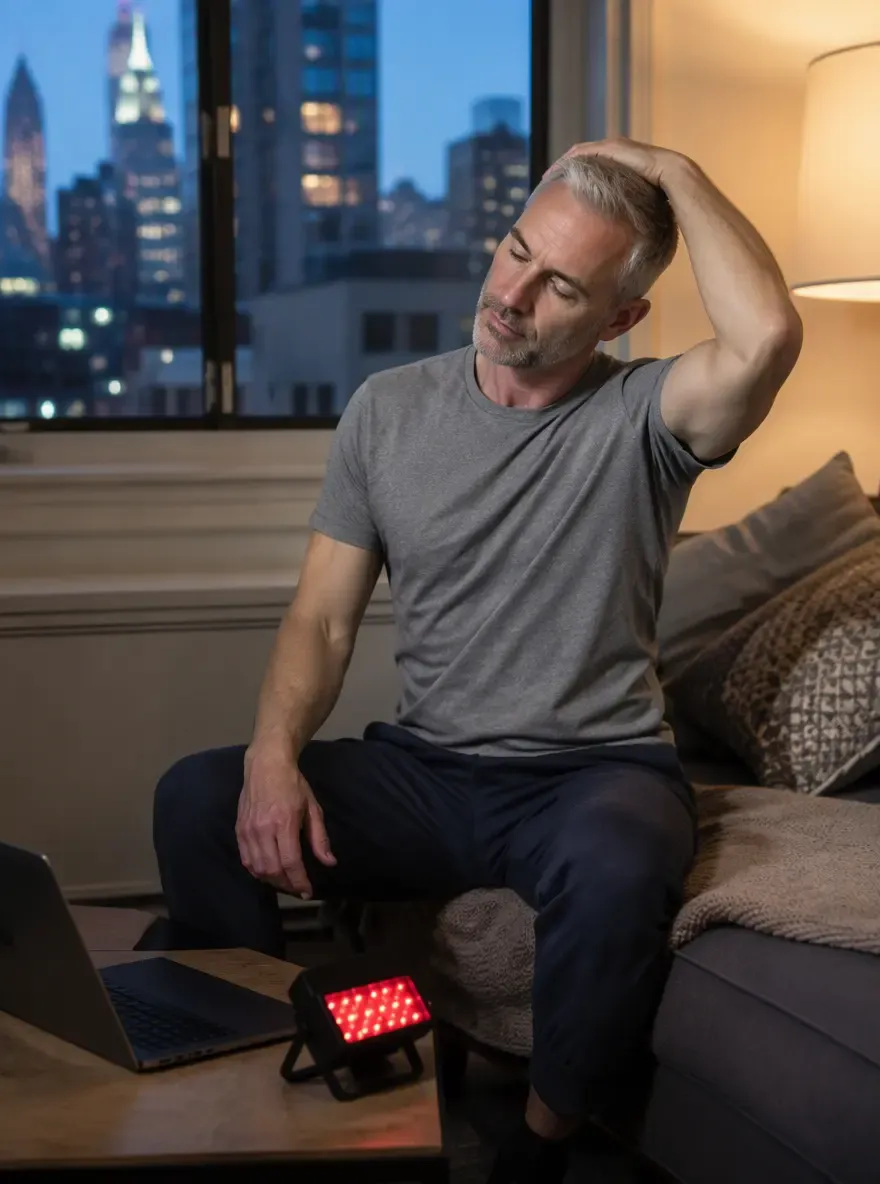
Every review, protocol, and guide on this site comes from something I tested on myself first — in my Queens apartment, on the 7 train, on the sidewalks of Astoria, wherever the day happens to put me.
When I write about a circulation booster or a neck stretcher, I'm telling you what worked, what didn't, and — just as often — what I tried and sent back. I call that section "The Engineer's Verdict," and you'll see it show up across the site. If a product doesn't hold up to actual testing, I say so.
I also write two books on this broader journey — Beyond the Well-Trodden Path and The Light Within — which go deeper into the philosophy behind this site than a blog post really can.
They're not required reading to get value here, but if the mind-body wellness side of recovery interests you, that's where I go further into it.
None of this is about selling you a miracle. It's about documenting what's actually helped me, and pointing you toward the same tools when they make sense for you. Every product recommendation you'll find links back to the vetted, engineering-tested selection at shop.restoremobility.org — the official curated shop that grew directly out of this site, not the other way around.
A Quick, Honest Disclaimer
I'm not a physician, and RestoreMobility isn't a substitute for medical care. I'm a recovery enthusiast and urban athlete sharing personal experience, independent research, and product testing — not diagnosis or treatment. If something here resonates, talk to a qualified professional before making changes to how you manage a real medical condition. What I can offer is what actually worked for me, tested honestly, written the way I'd tell a friend.
Thanks for reading this far. If you're dealing with the same kind of desk-bound wear and tear I was, you're in the right place — and you're not imagining it.
— Alex
Master Your Cellular Health: Science & Consciousness





Contact: info@restoremobility.org
I am not a doctor or licensed medical professional. The information and experiences shared on this website are for educational and informational purposes only. Nothing on RestoreMobility.org is intended to diagnose, treat, cure, or prevent any disease or medical condition.
All devices (red light therapy, TENS/EMS units, wrist laser devices, circulation massagers, etc.) and suggestions are based on my personal experience and general research. Results vary from person to person. Always consult with a qualified healthcare provider before using any wellness device or starting a new health routine — especially if you have high blood pressure, diabetes, heart conditions, pacemakers, implants, are pregnant, or have had recent surgery.
© Created by Restore Mobility